
Juhana Kallio: From Transactions to Transformation
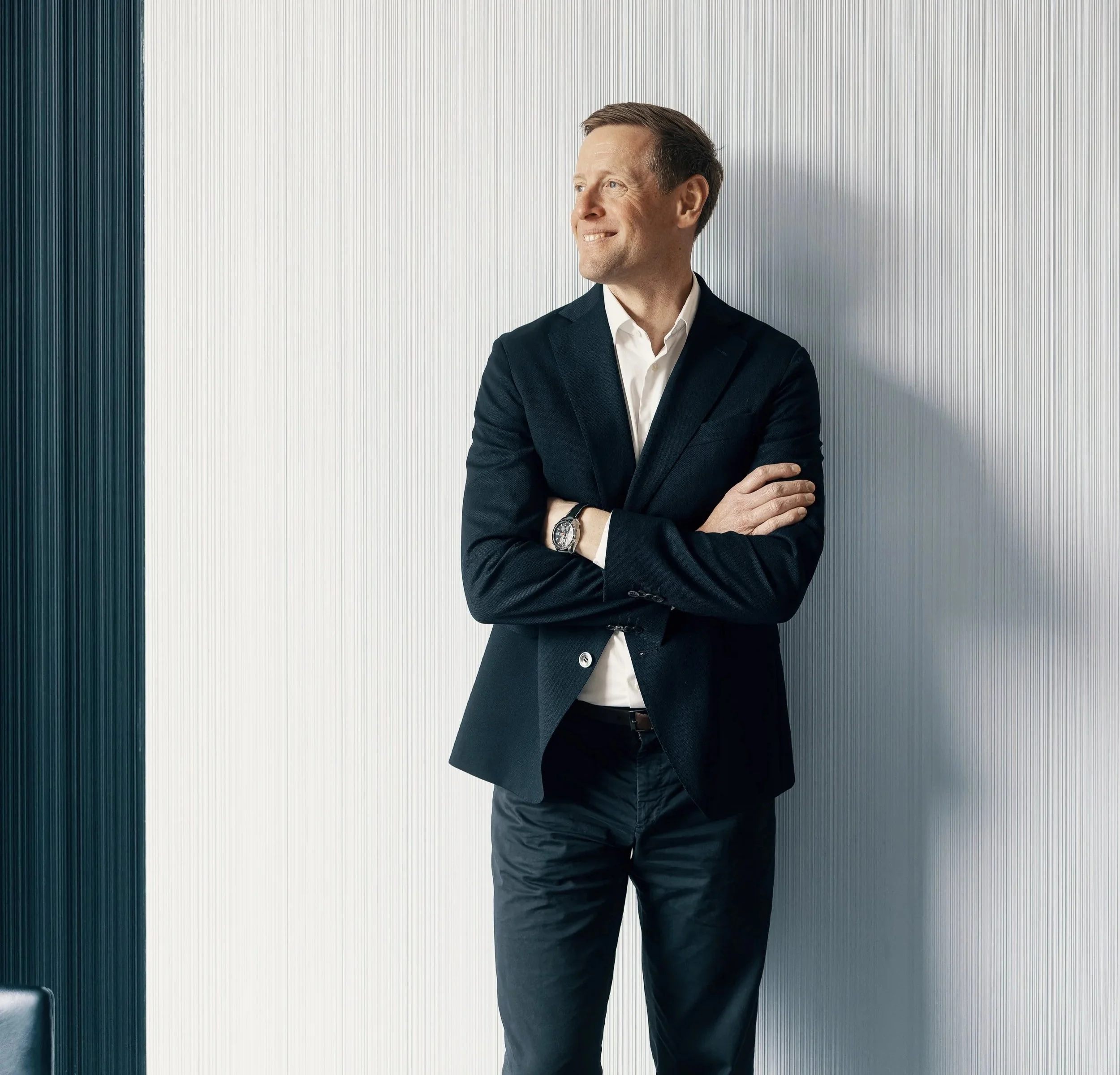
Henri Putkonen
From an active student life in KY – participating in clubs such as KY-Slice, the CEMS Board, and Boston Promenade – to investment banking in London, and, eventually, returning to Finland to lead one of Finland’s largest private equity buyout firms, Juhana Kallio has had a career with various twists and turns.
Finding business an intuitive choice already in upper secondary school, Kallio gravitated toward finance not only for its substance, but also for its selectivity. “The substance was interesting, but the difficulty of getting in appealed to me as an ambitious person,” Kallio reflects.
During his master’s studies, Kallio took his first steps abroad through the CEMS Master in International Management programme, spending a semester in Cologne. “I enjoyed it tremendously and still keep in touch with friends today,” he says. Looking back, Kallio sees the experience as valuable in two distinct ways: “An exchange gives perspective beyond your home country. At the same time, the programme’s focus on softer disciplines complemented finance extremely well.”
Taking the leap to London
After internships as a stockbroker at Eficor Oyj and as a financial analyst at Nordea Corporate Finance, Kallio took his second international leap – this time to London – joining Goldman Sachs’ Investment Banking Division (IBD) in the summer of 2003. How did the Finnish education fare on the global stage?
“Compared to the first-year Goldman Sachs analyst course, where people came from history, geology, or arts backgrounds, our toolkit was significantly more advanced,” Kallio explains. “We were doing work designed for analysts already as interns.” Kallio thanks his studies and internships for this preparedness.
Following graduation in early 2004, Kallio continued at Goldman in the Financial Institutions Group (FIG) before returning to Finland a year later. The contrast between London and Helsinki was striking.
“In Finland, you acquired data yourself, did the analyses and presentations yourself, and printed and prepared everything yourself. At Goldman, you had assistants, data resource centres, and presentation teams. The resources allowed you to focus entirely on substance. International banks like Goldman excelled at supporting employees so they could focus fully on delivering value.
Cultural differences were just as pronounced. “A Finnish corporate finance boutique is often a small, dynamic team with a relaxed atmosphere. In contrast, U.S. bulge bracket banks are very large organisations with high number of hierarchical levels,” Kallio says, emphasizing one distinction: “Work–life balance. The family aspect is very different from Nordic norms.”
From all the vivid projects at Goldman, Kallio highlights one. “During the Summer of 2004, we were selling a private bank in the Netherlands. We collaborated with lawyers continuously, juggling multiple buyers. At that time, there were physical data rooms. What stayed with me were the nights we had black markers in our hands, removing sensitive information from contracts. Thankfully, that work is now done digitally.”
Returning to Finland
In 2005, Kallio moved back to Finland, joining Nordea Corporate Finance as an Associate Director. While the technical substance resembled London, the context was different. “With a smaller team came greater responsibility,” he reflects, “You had a larger role earlier”.
From his experience in a large U.S. bank, Kallio could bring something new to his investment banking teams in Finland. “Presentation quality, attention to detail, and financial modelling – I learned an unbelievable amount in a short time. Twenty years ago, U.S. banks were exceptional at educating their employees. In Finland, learning was mostly on the job.”
A move to Danske Bank Corporate Finance (then Mandatum) followed in 2007, where Kallio assumed a Director role and focused on financial institutions and private equity clients. Leading private equity coverage naturally sparked a desire to experience the asset class from the inside.
From Transactions to Transformation
Transitioning from investment banking to private equity broadened the scope of work considerably. “Both are highly collaborative, which I truly enjoy. The difference is that private equity work is incredibly versatile,” Kallio explains.
Appointed Managing Partner in 2022, his role has evolved from executing investments to leading people. “Previously, I lead investments myself. Today, it’s more about team leadership, recruitment, and direction.”
“ International banks like Goldman excelled at supporting employees so they could focus fully on delivering value. “
Moving on to speak about private equity more generally, Kallio highlights the similarities across countries. “The largest Finnish transactions do not differ from the largest transactions of Sweden. They are done in the same way, with the same professionalism. What determines professionalism in the Nordics is size and counterparts, not country.”
The real distinction emerges in entrepreneur-led businesses. “The context is different as the other side may have limited or no experience on M&A transactions,” Kallio emphasizes. “In smaller companies, private equity can drive truly transformative growth and change. In larger corporates, improvements are often incremental.”
Private equity has received increased media attention in recent years, particularly in Finland’s relatively small buyout market. “There are only three active buyout funds with more than €200M in committed capital. Compared to other developed markets, that is a small number.”
With fewer private equity firms comes less competition. “If we are talking about big private equity firms in large markets, it is common that multiple PE investors are pitching to the same target firm.” However, the essential question remains the attractiveness of the investment. “It’s not about how many bidders there are, but whether good investments are found and how much value can be created.”
The rise of continuation vehicles
One notable difference between Finland and its neighbours has been the slower adoption of continuation vehicles (CVs). Kallio identifies two drivers behind their recent rise.
“First, LPs have wanted more liquidity.” After the economic shocks in recent years, the number of exits has been limited. “CVs have made it possible to provide liquidity to LPs in the lagging exit-market,” Kallio remarks, “This has been a positive development, for all stakeholders.”
“Second, there have been cases that GPs have not wanted to sell at the offered valuation. If the PE firm sees further growth potential in the asset, it can be also in the interest of the private equity firm to utilize a continuation vehicle.”
While CVs have risen in popularity, the media has also covered their caveats, often proposing agency problems between GPs and LPs. “I do not see it that way. The GP does not determine the price. The LPs typically have an option to continue with the investment. If they believe the valuation to be too low, they can invest in the continuation vehicle,” Kallio argues against.
In the same breath, he adds: “However, there is one potential conflict situation. Some LPs may be unable to continue investing in the CV due to liquidity constraints, policy limits or other reasons. In those cases, the question of valuation may in some cases become more complex.”
Looking ahead, Kallio believes continuation vehicles are here to stay, though in a more selective form. “In some cases, they are such a mutually beneficial solution for all stakeholders that I do not see them disappearing. However, the international CV market is extremely hot currently, partly due to the slow exit market in recent years. Over time, selectivity will increase.”
Leadership, Learning, and Perspective
Reflecting, on his career in various leadership positions, Kallio identifies several traits of a good leader in investment banking and private equity. “The leader must be able to know the substance well enough to be able to steer in the right direction, but also lead individuals with different strengths.”
Another trait a good leader has is the ability to reflect and improve. “At the start of my career, I was extremely detail-oriented and probably micromanaged. I was more focused on the substance instead of the people. Over the years, I’ve learned to focus on the big picture,” Kallio ponders.
What makes private equity rewarding? “The success stories you create together with others. Be it with the entrepreneurs, the leadership, the Intera team, or the personnel. The transformation of the target companies from the investment to the exit is massive. This requires collaboration and succeeding together.” Kallio adds that Intera has been part of numerous international growth stories, e.g. PHM, Renta, Roima and Rantalainen.
Having had a very successful career for a Finnish graduate, what does Kallio believe are the capabilities that have enabled his succession? “Probably the variety in the skill set. Analytical capabilities, softer human skills, and sales skills – all have mattered.” On a similar note, Kallio leaves three pieces of concluding advice for our younger readers.
“I encourage you to invest in learning early on. The position or the title truly does not matter in your first years. What is important is gaining a lot of experience.” Second, he emphasizes the ability to sell. “In Finland selling is undervalued. Sales knowledge is essential in many positions.” Finally, Kallio encourages to try to gain some international experience. “Be it a university semester abroad, an internship, or a full-time position. In my career, it has provided a ton.”
One lesson from Aalto has stayed with him throughout his career. “Twenty-five years ago, during my studies, there were courses called Business Communication Skills 1 and 2. From there, one lecture stayed with me over all these years – know your audience. In whatever you do and communicate, always keep in mind who you are talking to. That has been extremely beneficial in all the diverse roles. I often notice that people forget considering who their audience really is.” Two decades on, the courses still exist at Aalto – and so does the advice.
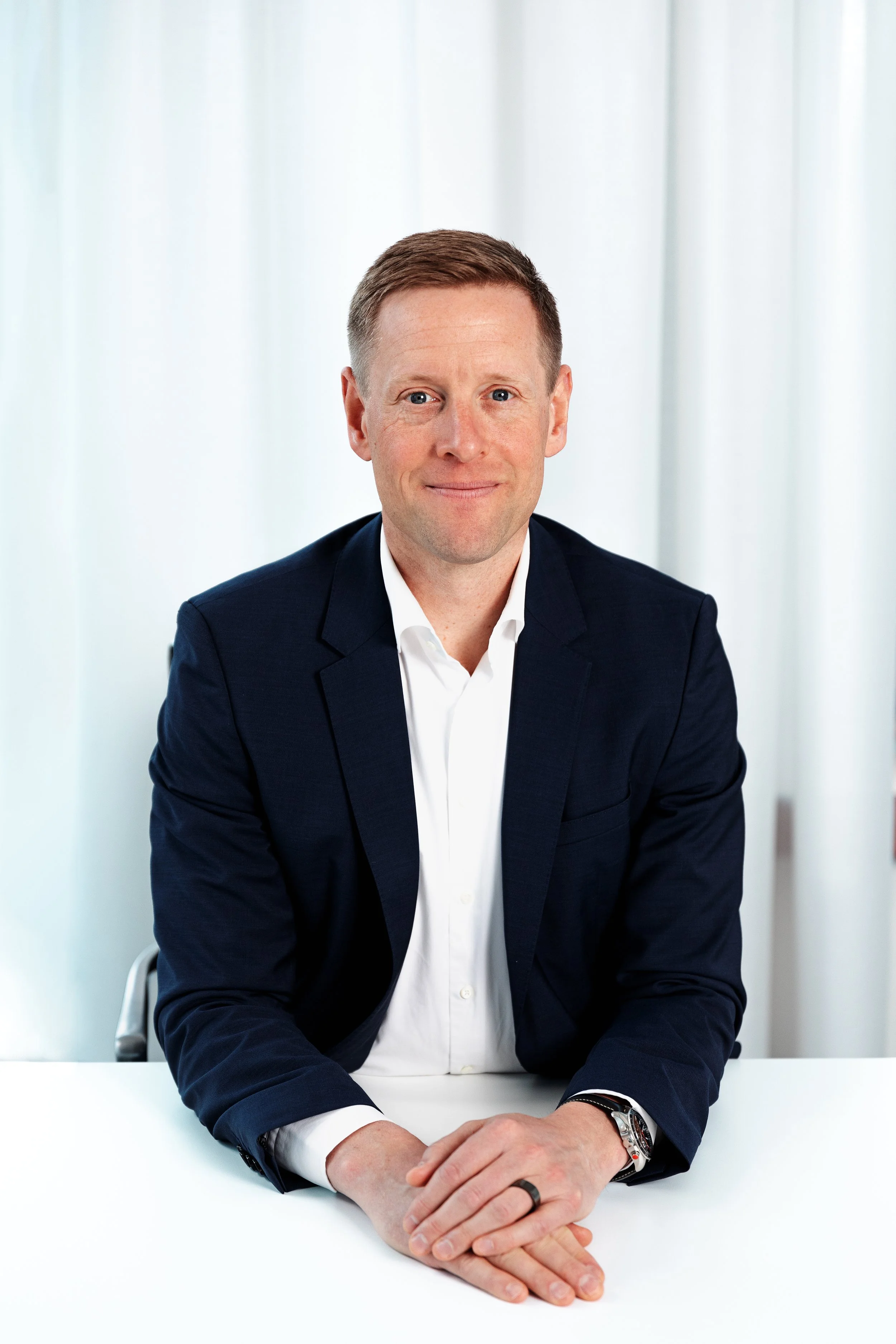
Juhana Kallio
- Current position: Managing Partner, Intera Partners
- Past companies: Danske Bank, Nordea, Goldman Sachs
- Education: M.Sc. in Finance, CEMS MIM
- Hobbies: Tennis, guitar
- Family: Wife, two children
- Based in: Espoo
Henri Putkonen is the Editor-in-Chief of AFA Quarterly.